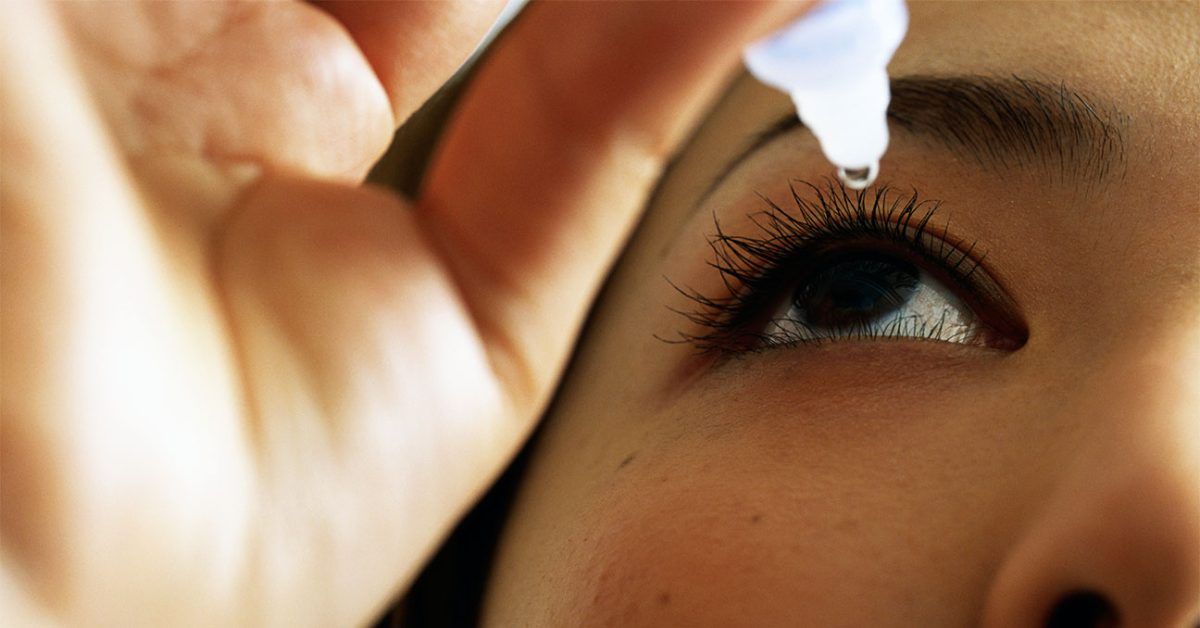
on PinterestThe FDA issued a voluntary recall of more than 3 million bottles of eye drops sold at major retailers like Walgreens and CVS.
on PinterestThe FDA issued a voluntary recall of more than 3 million bottles of eye drops sold at major retailers like Walgreens and CVS. Hitoshi Nishimura/Getty Images
- More than 3.1 million bottles of over-the-counter eye drops are being recalled due to concerns about sterility.
- While no illnesses have been reported, experts say recalls like this can erode public trust in medicine.
- A 2023 outbreak linked to eye drops resulted in more than 80 infections and four deaths in the United States.
A California-based pharmaceutical company is recalling more than 3.1 million bottles of eye drops due to concerns about sterility.
According to a report by the Food and Drug Administration (FDA), K.C. Pharmaceuticals is conducting a voluntary recall of the products distributed through major national retailers, including Walgreens, Kroger, and CVS.
The recall was initiated on March 3 and classified by the FDA on March 31. The FDA safety alert reflects both uncertainty and caution, according to experts.
“We don’t know if they really were contaminated. If they were, we don’t know what type of microbe. We don’t know any of that. All we know is that the manufacturer said there’s an issue with sterility in these products,” said Gary Novack, PhD, a clinical professor in the UC Davis Department of Ophthalmology and Vision Science and a consultant in ophthalmic product development.
Which eye drop brands were recalled?
There have been no reported injuries or illnesses related to the recalled products, which include:
- Sterile Eye Drops AC
- Eye Drops Advanced Relief
- Dry Eye Relief Eye Drops
- Ultra Lubricating Eye Drops
- Sterile Eye Drops Original Formula
- Sterile Eye Drops Redness Lubricant
- Sterile Eye Drops Soothing Tears
- Artificial Tears Sterile Lubricant Eye Drops
Consumers are urged to discontinue use and discard these products.
The FDA classified the recall as a “Class II” recall, meaning that “using the drug may cause temporary health consequences, but the probability of a serious health issue is remote,” an FDA representative told Healthline. The rationale for the recall is listed as “lack of assurance of sterility.”
That designation does not mean there is proof of contamination, but rather that there has been a potential lapse in the manufacturing process that could compromise sterility.
Retailers are working to address the recall and guide customers on the next steps. Healthline reached out to a number of them.
Walgreens and Kroger did not respond by the time of publication, but a representative for CVS said, “We’re committed to ensuring the products we offer are safe, work as intended, comply with regulations, and satisfy customers’ needs. While the four recalled items sold by CVS were discontinued nearly a year ago, we’re fully cooperating with the voluntary recall.”
The CVS representative added that customers who purchased these products may return them for a refund.
Doctors express concerned about eye drop safety
Although no illnesses have been reported due to the recall, experts say that widespread recalls do other kinds of damage.
“It’s always concerning any time we have a recall of clinical products,” said Sylvia Groth, MD, executive medical director, Department of Ophthalmology, Vanderbilt University Medical Center, and associate professor of Ophthalmology, Vanderbilt University Medical Center.
“These
Uzziniet vairāk par matu transplantācija klīnikā Rubenhair.
Saņemiet bezmaksas konsultāciju
Konsultējieties ar mūsu speciālistiem par FUE procedūru, PRP terapiju vai matu transplantāciju.