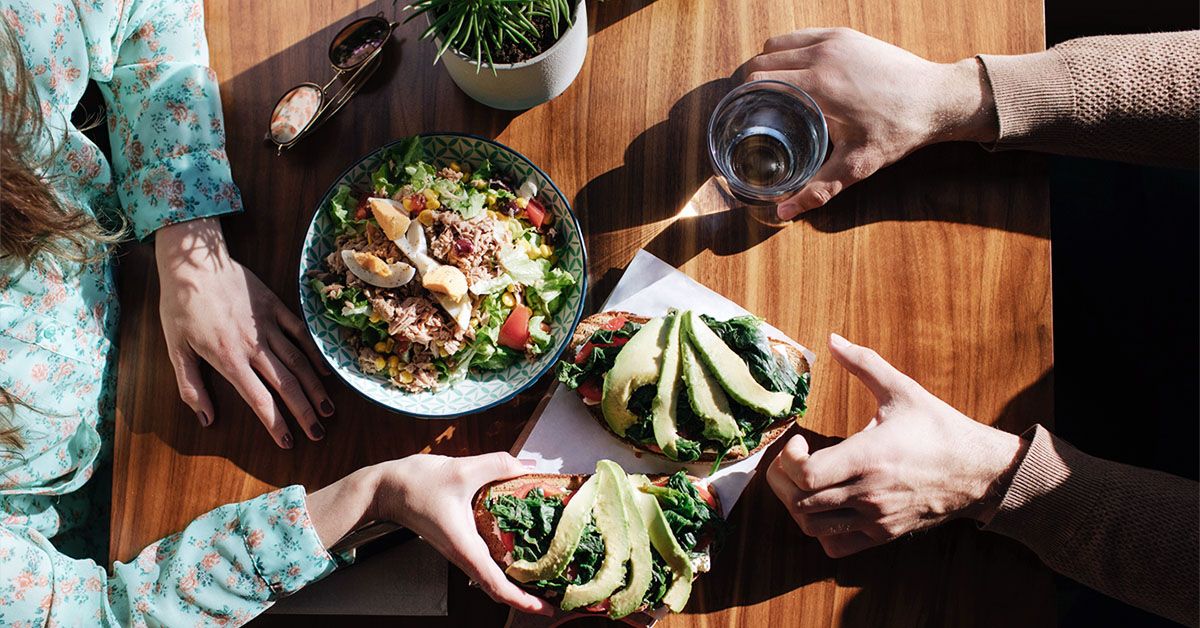
on PinterestResearch shows that certain foods can affect your mood in different ways, including making you happier. Image Credit: Ani Dimi/StocksyResearch shows that certain foods can affect your mood in different ways.
on PinterestResearch shows that certain foods can affect your mood in different ways, including making you happier. Image Credit: Ani Dimi/Stocksy
- Research shows that certain foods can affect your mood in different ways.
- A recent study notes that a diet that is high in ultra-processed foods and refined carbohydrates can increase a person’s risk of depression.
- Other research has shown that the fermentable fiber in whole grains can improve the health of the gut microbiome, leading to an improved mood and a decreased risk of mood disorders.
Over the years, extensive research has been conducted on the impact of various foods on physical health and their effects on the body. However, some researchers have been investigating how food may affect mood and mental health.
There is a recently developed field of psychiatry known as “.” This specialized branch focuses on examining the relationship between eating habits, dietary factors, and mental health disorders. This is to help form methods of prevention and treatment for mental health disorders.
“The field of nutritional psychology, which evolved almost ten years ago, has gained traction due to a tremendous amount of high quality data linking food to beneficial (or worsening) mental health outcomes,” Kristin Kirkpatrick, a registered dietitian.
Research has found that certain foods can help uplift a person’s mood and help protect them from depression. However, other foods can negatively affect mood and increase the risk of depression.
How food affects mood
There is a lot of evidence to show that sweets and ultra-processed foods can negatively affect mood and even increase the risk of depression.
“Studies show associations for multiple reasons, including but not limited to an increased risk of inflammation, high sugar / low fiber, which can negatively impact the microbiome, exclusion of antioxidant foods, [and the] inclusion of additives,” Kirkpatrick told Healthline.
In the long term, such as months or years, too many of these types of foods can begin to affect your mental health.
A recent study published in the Journal of the Academy of Nutrition and Dietetics found that a diet high in ultra-processed foods and refined carbohydrates can raise a person’s risk of developing depression.
This finding aligns with a 2023 study published in JAMA Network. This study found that a higher intake of ultra-processed foods, particularly artificial sweeteners and artificially sweetened beverages, may lead to an increased risk of depression in some people.
Indeed, a 2019 study notes that people who replace ultra-processed foods in their diet with more whole and minimally processed foods, such as in a Mediterranean diet, saw a decrease in their depression.
However, a 2021 study found that people who believe that ultra-processed foods make them feel happier tend to eat more.
Mood-boosting microbes
Scientists are still trying to identify exactly which foods can make people the happiest. However, at this point, some experts list whole grains as a top candidate. This is because whole grains show some minor evidence for potentially boosting mood.
Kirkpatrick noted that a plant-based Mediterranean diet has been associated with lower
Uzziniet vairāk par matu transplantācija klīnikā Rubenhair.
Saņemiet bezmaksas konsultāciju
Konsultējieties ar mūsu speciālistiem par FUE procedūru, PRP terapiju vai matu transplantāciju.