on PinterestEating more plants and fewer processed foods can help with weight management during menopause.
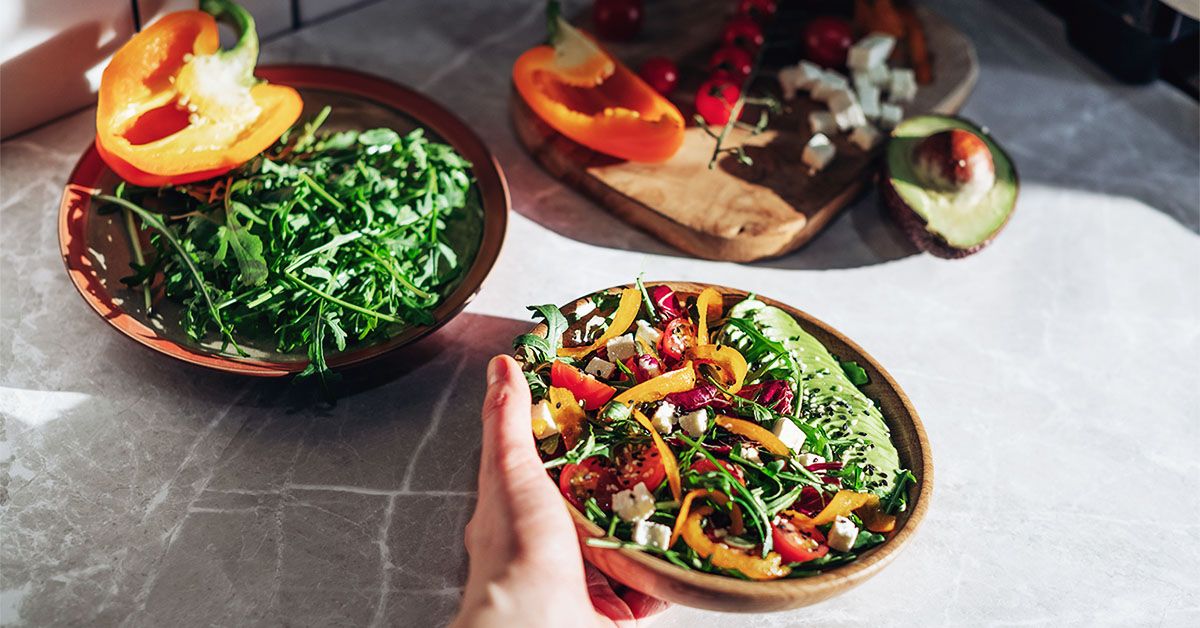
on PinterestEating more plants and fewer processed foods can help with weight management during menopause. Viktoriya Skorikova/Getty Images
- A new study found that diets rich in plant foods and low in processed meats and salt may help with menopause weight gain.
- Plant foods have nutrients linked with better metabolic health and a healthy gut microbiome.
- Experts recommend starting a plant-forward diet with foods you already enjoy.
Weight gain is common during menopause, a life stage accompanied by significant changes in the body.
New research sheds light on how diet can influence weight gain and obesity risk during menopause.
The study, conducted by researchers from Harvard and the National tracked eating habits and weight changes during the time surrounding menopause.
The findings suggest that adopting certain healthy dietary patterns, especially those rich in plant foods and low in processed meats and salty snacks, may help females better manage their weight during this transition. The study was published on May 20 in JAMA Network Open.
The research offers important insights for women and healthcare providers seeking effective strategies to support metabolic health during midlife and beyond.
Examining dietary patterns around menopause
The study was based on the Nurses’ Health Study II, a large ongoing research project that began in 1989 and includes female nurses from across the United States.
For this particular investigation, the researchers focused on females going through menopause and followed them for about 12 years: six years before and six years after their reported menopause. Over 38,000 females took part.
Menopause was defined as the point at which females stopped menstruating for at least one year.
Every four years, participants completed detailed food questionnaires that captured their usual intake of various foods.
The research team then analyzed these responses to calculate scores for 11 different dietary patterns.
These patterns included well-known diets like the Mediterranean diet, the DASH diet (designed to lower blood pressure), and plant-based diets, as well as newer approaches like the Planetary Health Diet, which emphasizes sustainability and heart health.
They also looked at diets categorized by their effects on insulin and inflammation, as well as the consumption of ultra-processed foods.
Participants self-reported their weight every 2 years, and the team calculated the annual weight gain or loss for each woman during the study. They also tracked which females developed obesity during the follow-up period.
To ensure accurate results, the researchers accounted for factors like age, race, income, physical activity, smoking, hormone therapy use, and baseline body weight.
Plant-forward diets linked to less menopause weight gain
The study found that participants’ diets were strongly associated with differences in weight gain and obesity risk during menopause.
Those who followed healthier eating patterns — such as plant-based diets, the Mediterranean diet, the DASH diet, and especially the Planetary Health Diet — tended to gain less weight over time compared to those with less healthy diets.
Overall, these healthy diets were generally rich in fruits, vegetables, whole grains, nuts, and legumes, and lower in red and processed meats, salty foods, potatoes, and fried snacks like french fries, according to the authors.
One particularly
Uzziniet vairāk par matu transplantācija klīnikā Rubenhair.
Saņemiet bezmaksas konsultāciju
Konsultējieties ar mūsu speciālistiem par FUE procedūru, PRP terapiju vai matu transplantāciju.