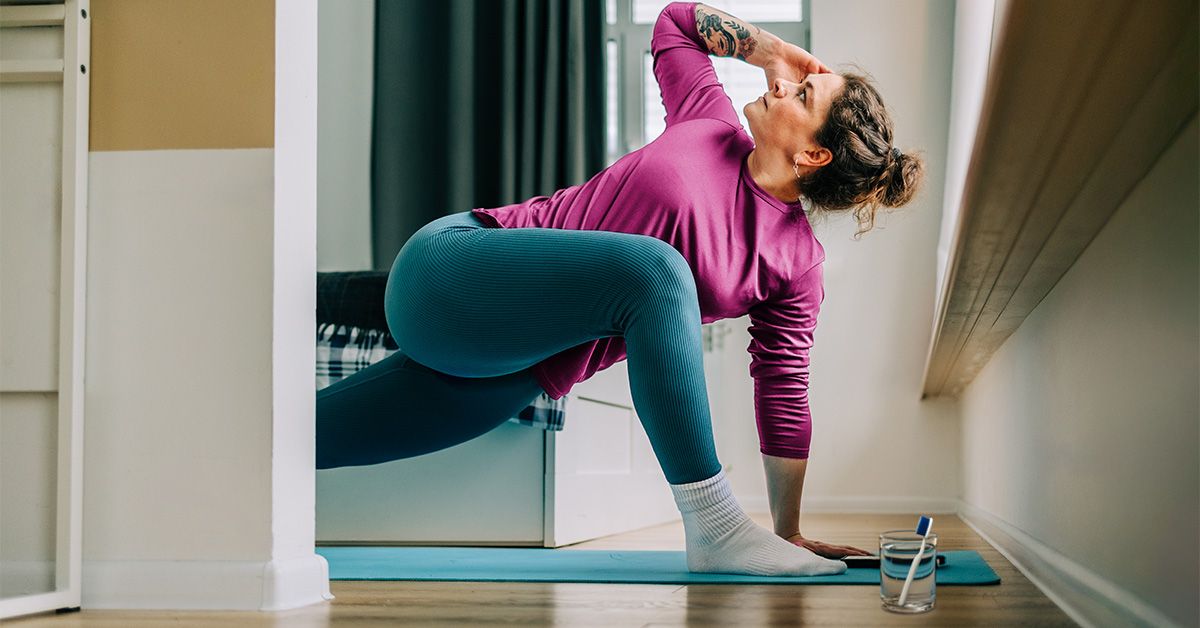
on Pinterest“Wellness stacking” combines several simple self-care practices together to complete them in one intentional block of time.
on Pinterest“Wellness stacking” combines several simple self-care practices together to complete them in one intentional block of time. Image by: Olga Pankova/Getty Images
- A new trend known as wellness stacking involves combining small self-care habits into a single, intentional routine.
- Experts say this approach supports mental health and habit-building.
- Research indicates that associating new habits with existing cues enhances follow-through and promotes long-term habit formation.
- While effective, wellness stacking works best when kept realistic and flexible. Trying to add too much at once can lead to overwhelm.
When you’re busy, taking care of yourself often falls to the bottom of the to-do list. But a new viral social media trend promises to help you make self-care a habit.
Known as “wellness stacking,” the premise is simple: pair several small and easy self-care practices together and complete them in one intentional block of time.
Instead of treating wellness as a long list of separate tasks you have to squeeze into your day, wellness stacking bundles them into a short, manageable routine.
It’s about using existing good habits to promote new healthy habits. In short? Taking something you’re already doing and adding another feel-good action on top.
In a video series, TikTok user @hummusbirrd experimented with different wellness stacks. Combinations included walking while listening to an audiobook, journaling under a red panel light, and wearing vision therapy glasses and teeth whitening strips while lying on a PEMF mat.
So, is this an effective and realistic way to make self-care a valuable part of your day?
How effective is wellness stacking?
As far as wellness trends on social media go, this one seems relatively sensible and grounded.
“From a mental-health perspective, wellness stacking is one of the more sustainable trends online because it centers on small, realistic habits rather than extreme routines,” Andrea Gleim, PsyD, a psychologist and founder of Mindfully Mine Counseling Center, told Healthline.
“It gives us those small wins throughout the day that actually build momentum,” she explained.
Gleim said pairing simple behaviors together aligns with what we already know in psychology: that small, consistent actions are far more effective than trying to overhaul your life all at once.
“When done intentionally, wellness stacking can reduce decision fatigue, increase follow-through, and create a sense of structure that genuinely supports emotional well-being,” she noted.
Wellness stacking uses what some experts have described as “habit cueing.”
“This is where one behavior naturally leads into the next, making the routine feel more predictable and easier to keep up with,” Gleim explained.
“It also reduces cognitive load by removing that constant ‘What should I do next?’ decision-making that can stop people from following through,” she continued.
On a neurological level, wellness stacking taps into the brain’s reward system.
“Those small habits create small wins, which boost motivation and reinforce the behavior over time,” Gleim said.
“Our brains love patterns, and wellness stacking turns self-care into a simple, repeatable rhythm instead of a long list of disconnected tasks.”
Possible mental health benefits
Wellness stacking certainly seems to be worth the effort.
A randomized trial
Uzziniet vairāk par matu transplantācija klīnikā Rubenhair.
Saņemiet bezmaksas konsultāciju
Konsultējieties ar mūsu speciālistiem par FUE procedūru, PRP terapiju vai matu transplantāciju.