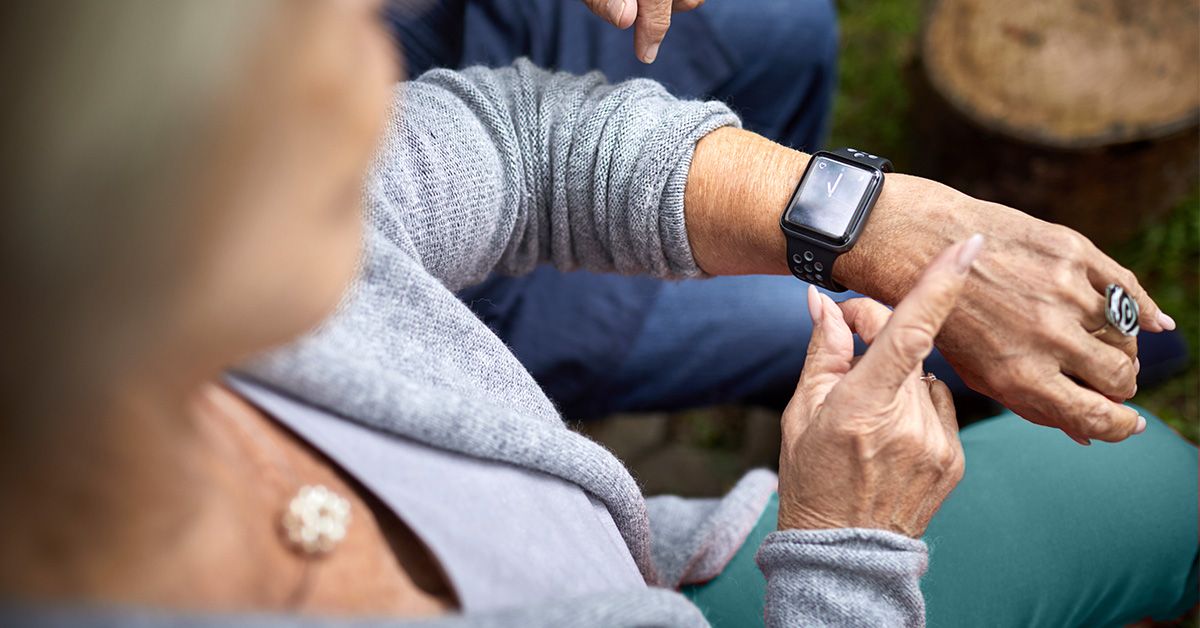
on PinterestWearable trackers may help detect depression relapse before it occurs by tracking sleep, a study shows.
on PinterestWearable trackers may help detect depression relapse before it occurs by tracking sleep, a study shows. Image Credit: Oliver Rossi/Getty Images
- A recent study has found that using a wearable tracker may be able to detect depression relapse before it occurs via sleep patterns.
- Sleep and depression are known to be linked. Sleep disturbances can be both a symptom and a risk factor for depression.
- Detecting a depression relapse before it occurs may help prevent the relapse altogether.
New research from McMaster University suggested that a wrist-worn device, such as a smart watch, may be able to signal when a person is at an increased risk of a relapse of major depressive disorder (MDD).
MDD is also referred to as “clinical depression.” It is a common mental health condition that involves persistent sadness and a loss of interest in activities, impacting mood, behavior, and physical functions.
The study, recently published in JAMA Psychiatry, highlighted a simple and effective way to monitor the risk of relapse in people with MDD.
Wearable trackers could even detect the probability of a relapse weeks or months before it occurs. Up to around 60% of people with MDD will experience at least one relapse episode in their lifetime.
“Advances in digital technology and AI algorithms have a great potential for relapse prevention in mental health,” Benicio Frey, MD, professor in the Department of Psychiatry and Behavioural Neurosciences at McMaster, and a co-author of the study, said in a press release.
“Imagine a future where a smartwatch can warn people with depression: ‘A new episode of depression is very likely coming within the next four weeks. How about seeing your health-care provider?’” he continued.
Wearable trackers detect MDD relapse
The study followed 93 adults from across Canada who had previously recovered from depression. Each participant wore a research-grade actigraphy device, such as a FitBit or Apple Watch.
“This is a great study, and [a] theme which wonderfully presages the upcoming AI analysis of biometrics to determine human mood and health states,” said Alex Dimitriu, MD, double board certified in Psychiatry and Sleep Medicine and founder of Menlo Park Psychiatry & Sleep Medicine, who was not involved in the study.
“Our biology, especially mental health-related, is often quite a fuzzy signal — there [are] good days, bad days, stress, sleep, and random life events which can make our moods look all over the place. Tracking with wearables over longer periods of time can begin to expose patterns which would otherwise be hard to detect. In this study, variance in sleep was shown to effectively predict depressive relapse,” he said.
Participants wore the device for 1 to 2 years. This generated over 32,000 days of activity and sleep data.
The researchers found the following key points from the data collected:
- Participants who had the most irregular sleep profiles showed nearly double the risk of relapse.
- The strongest predictor for relapse was when less of a difference between daytime activity and nighttime rest was detected.
- The amount of time a person spent
Узнайте больше о пересадка волос в клинике Rubenhair.
Получите бесплатную консультацию
Проконсультируйтесь с нашими специалистами о процедуре FUE, PRP-терапии или пересадке волос.