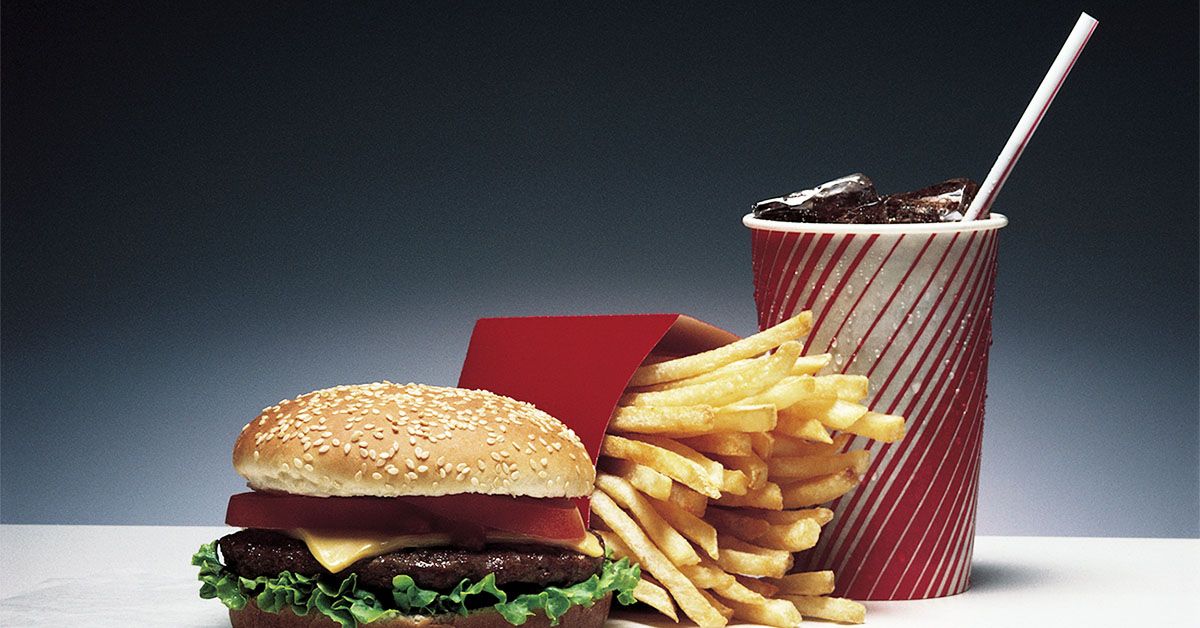
on PinterestNew research shows that ultra-processed foods may increase the risk of death following a cancer diagnosis.
on PinterestNew research shows that ultra-processed foods may increase the risk of death following a cancer diagnosis. Image Credit: Comstock/Getty Images
- Higher intake of ultra-processed foods is associated with increased mortality among cancer survivors.
- A recent study shows that people with the highest intake of ultraprocessed foods had a 48% higher rate of death from any cause and a 57% higher rate of death from cancer.
- Researchers say increased inflammation and an elevated resting heart rate could explain the link between ultra-processed food intake and increased mortality.
Cancer survivors who eat higher amounts of ultra-processed foods in their diets have a significantly increased risk of death from all causes, as well as from cancer.
A new study found that people who ate the highest amount of ultra-processed foods by weight ratio had a 48% higher rate of death from any cause. They also had a 57% higher rate of death from cancer compared to those who ate the least amount of ultra-processed foods.
The findings were published on February 4 in Cancer Epidemiology, Biomarkers and Prevention.
“What people eat after a cancer diagnosis may influence survival, but most research in this population has focused only on nutrients, not how processed the food is,” study author Marialaura Bonaccio, PhD, a researcher at the Research Unit of Epidemiology and Prevention at IRCCS Neuromed in Pozzilli, Italy, said in a press statement.
“The substances involved in the industrial processing of foods can interfere with metabolic processes, disrupt gut microbiota, and promote inflammation. As a result, even when an ultra-processed food has a similar calorie content and nutritional composition on paper compared to a minimally processed or ‘natural’ food, it could still have a more harmful effect on the body,” Bonaccio continued.
Ultra-processed foods raise death risk by 48%
In conducting the research, Bonaccio and colleagues followed more than 24,000 people between March 2005 and December 2022.
The participants were ages 35 or older at the commencement of the study, and all lived in southern Italy.
Within that cohort, 802 cancer survivors were enrolled at the beginning of the study and provided detailed dietary information via a food questionnaire. The researchers used the NOVA classification system, which categorizes foods into groups based on the extent of their level of processing, to determine whether a food was ultra-processed.
The researchers calculated the proportion of ultra-processed foods in a person’s diet using both a weight ratio (total daily weight of ultra-processed foods divided by total daily weight of all foods and beverages) and an energy ratio (total daily calories from ultra-processed foods divided by total daily calories).
The researchers adjusted for other factors like smoking status, overall diet quality, BMI ,and medical history before dividing the individuals into three groups based on the weight ratio of ultra-processed foods they ate.
Those in the group with the highest third of ultra-processed foods consumption had around a 48% higher rate of death from any cause, as well as a 57% higher rate of death from cancer, compared with those in the lowest third.
“The fact that the association between ultra-processed foods and
Uzziniet vairāk par matu transplantācija klīnikā Rubenhair.
Saņemiet bezmaksas konsultāciju
Konsultējieties ar mūsu speciālistiem par FUE procedūru, PRP terapiju vai matu transplantāciju.